
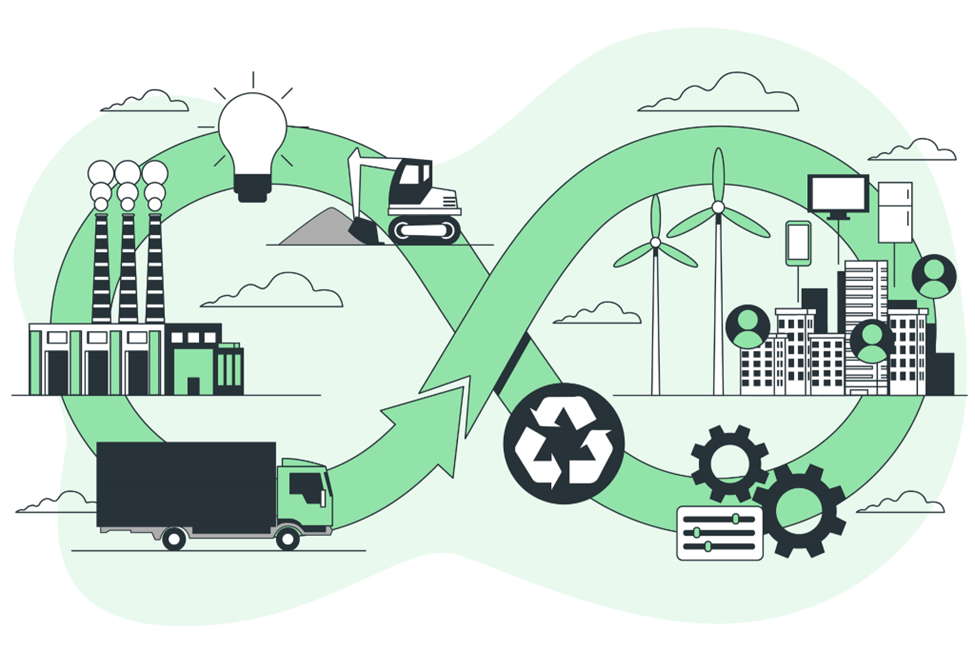
Global Developments in Sustainable Supply Chains
We have been closely monitoring global developments in sustainable supply chains, recognizing their pivotal role in achieving broader environmental and economic resilience. The Massachusetts Institute of Technology (MIT) has once again delivered invaluable insights through its annual reports on supply chain sustainability.
The 2024 edition, marking the fifth in the series, drew from surveys of over 7,000 professionals across more than 80 countries, while the 2026 report – based on input from 1,203 experts in 97 nations – builds on this foundation to assess ongoing priorities.
These documents reveal both encouraging progress and persistent challenges, underscoring the imperative for industry leaders to intensify efforts, particularly in Scope 3 emissions management.
We have synthesized key findings from these reports and outline how Switch Climate Tech is equipping organizations to address these issues systematically.
Key Findings: Momentum Amid Measurement Gaps
MIT’s reports affirm that sustainability remains a firm-level imperative, with 85% of companies either maintaining or expanding their supply chain initiatives despite economic uncertainties and regulatory shifts.
85% – Companies maintaining or expanding sustainability initiatives
25% – Growth in investor pressure over the past five years
7K+ – Professionals surveyed across more than 80 countries
Investor pressure has surged by 25% over the past five years, emerging as the fastest-growing external driver, especially in North America where it rivals firm leadership and competitive dynamics.
In Europe, government mandates such as the Corporate Sustainability Reporting Directive (CSRD), exert comparable influence, compelling regular disclosures on environmental impacts.
The Scope 3 Challenge
Yet, progress is uneven. Scope 3 emissions, which encompass indirect activities across the value chain and can constitute up to 75% of a company’s total carbon footprint, continue to pose formidable barriers.
- 40% of firms rigorously track Scope 1 and 2 emissions
- 70% report insufficient supplier data
- 50% rely on basic spreadsheets
Only about 40% of firms rigorously track Scope 1 (direct) and Scope 2 (purchased energy) emissions, with far fewer achieving equivalent accuracy for Scope 3 due to fragmented supplier data. 70% of respondents report insufficient information from their networks. Measurement practices exacerbate these issues: half of North American firms rely on basic spreadsheets and rough economic proxies, yielding estimates with significant error margins that undermine investment in greener alternatives.
“You get what you measure. If you measure poorly, you’re going to get poor decisions that most likely won’t drive the reductions you’re expecting.”
— Josué Velázquez Martínez, Director, MIT Sustainable Supply Chain Lab
And this is exactly what Switch addresses front and center.
Our mantra is Measure, Mitigate and Transform.
Progress and Persistent Gaps
On a positive note, advancements in freight transportation signal potential: increased adoption of biofuels, electric vehicles, and hydrogen options reflects growing infrastructure readiness, alongside efficiency gains from optimised logistics. However, 67% of firms lack net-zero targets, and even those with goals often fall short on implementation, particularly in multi-tier supplier engagement.
Transportation Advances:
- Biofuels adoption increasing
- Electric vehicle infrastructure growing
- Hydrogen options emerging
- Optimised logistics efficiency
Implementation Challenges:
- 67% lack net-zero targets
- Multi-tier engagement gaps
- Supplier data fragmentation
- Methodological shortcomings
“The State of Supply Chain Sustainability 2024 provides a thorough analysis of our current understanding, along with valuable insights on how to improve our Scope 3 emissions accounting to have a greater impact on lowering our emissions.”
— Mark Baxa, President & CEO, CSCMP
These findings, grounded in rigorous global data, highlight a critical divergence: while external pressures and technological enablers propel action, methodological shortcomings hinder scalable reductions.
A Call to Industry Leaders: Prioritise Tier 1 and 2 Suppliers
To effect meaningful change, executives should commence with their most influential partners: tier 1 and tier 2 suppliers, which typically account for the bulk of value chain emissions.
Key Focus Areas:
- Target Key Suppliers
- Foster Transparency
- Incentivise Innovation
- Cascade Best Practices
Failure to act risks not only regulatory non-compliance but also reputational and financial vulnerabilities, as investors increasingly scrutinise supply chain integrity.
By embedding sustainability into procurement and performance metrics; leveraging advanced analytics over ad-hoc estimates; leaders can transform these risks into competitive advantages.
The time for incremental adjustments has passed; a structured, supplier-centric framework is
essential to align ambitions with verifiable outcomes.
Switch Climate Tech: Empowering Tiers 1, 2, and 3 for Scope 3 Mastery
At Switch Climate Tech, we are committed to operationalising these insights through our comprehensive carbon accounting platform, designed specifically to demystify and diminish Scope 3 emissions.
Our solutions extend beyond tier 1 suppliers to encompass tiers 2 and 3, enabling even smaller entities to participate in emissions management without prohibitive costs or complexity. Most importantly,
Switch makes the global standards and products accessible, economically viable and impactful.
- Automated Data Collection
- AI-Driven Assessments
- Standardised Reporting
- Scenario Modelling
Our platform integrates automated data collection, AI-driven life cycle assessments, and standardised reporting tools, allowing suppliers to track and verify their carbon footprints in real time. For instance, tier 1 partners can upload operational data seamlessly, while our tier 2 and 3 modules provide templated interfaces for rapid onboarding; reducing the 70% data gap cited in MIT’s analysis. We facilitate planned Scope 3 strategies by offering scenario modelling, where companies simulate reduction pathways (e.g., supplier shifts to low-carbon materials or transport electrification) and benchmark against industry peers.
Through Switch, organisations gain a holistic view of their value chain, from raw material sourcing to end-of-life disposal, empowering data-informed decisions that yield 20-30% faster emissions reductions in early adopters. Our collaborative ecosystem includes training resources and certification pathways, ensuring suppliers build internal capabilities for sustained impact. Ultimately, Switch transforms Scope 3 from a liability into a lever for resilience, helping firms meet investor expectations and regulatory demands with precision.
Looking Ahead: Collaborative Progress for a Sustainable Future
MIT’s reports serve as a clarion call – Sustainability in supply chains is not merely a priority but a prerequisite for enduring success. By prioritising tier 1 and 2 engagement and harnessing tools like those from Switch Climate Tech, industry leaders can close the measurement chasm and accelerate genuine decarbonisation.
Join the Effort
We invite fellow executives to join this effort. At Switch, we are ready to partner; whether through platform pilots or strategic consultations; to chart your Scope 3 journey. Together, we can convert global insights into local actions, forging supply chains that are as sustainable as they are robust.
Build the Future with Switch Climate Tech – One Verified Emission at a Time
Ready to transform your supply chain sustainability?
For more on our solutions, Visit: https://www.switchclimatetech.com. Get in touch with our team to explore how Switch Climate Tech can support your Scope 3 journey.
