
Supply chain decarbonization is a procurement decision, not a reporting exercise. Here is what changed in 2026, and what a procurement leader can start immediately.
Vinayak Satpute | Founder and CEO, Switch Climate Tech | IPCC Expert Reviewer | September 2026
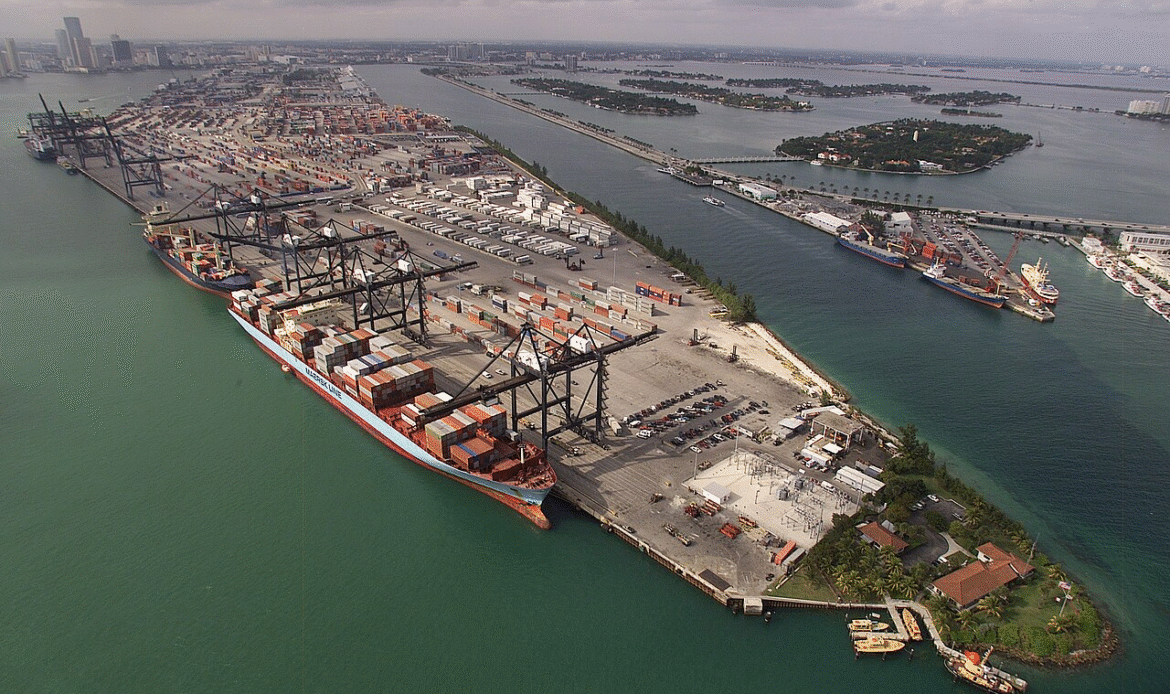
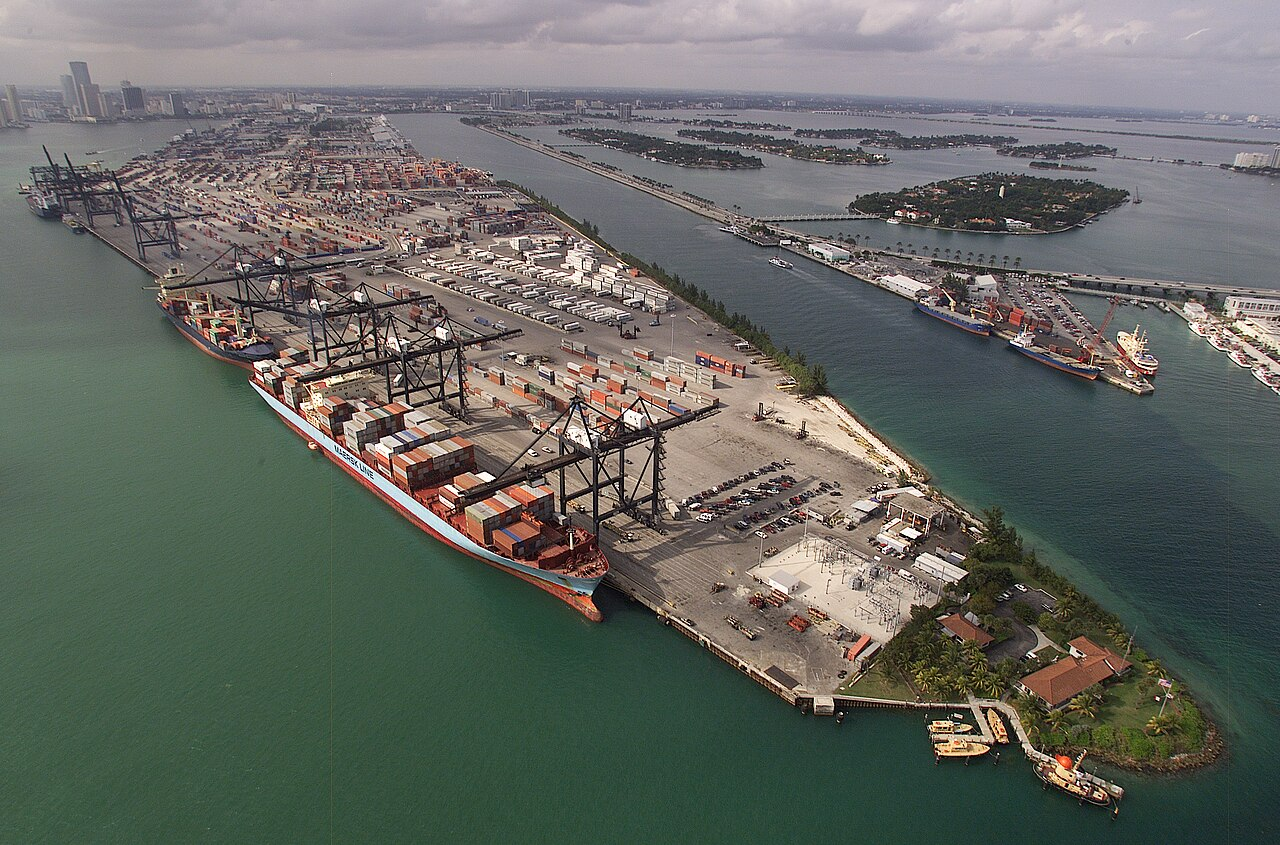
A container terminal at work. Roughly eighty percent of world merchandise trade by volume moves by sea, which is why a single strait or a single fire season can reprice an entire procurement plan. Photo: James R. Tourtellotte, U.S. Customs and Border Protection, public domain, via Wikimedia Commons.
Two shocks, one question
On 28 February 2026, strikes on Iran settled the argument about whether the Strait of Hormuz was a theoretical risk. Within days Maersk and other major carriers suspended transits, and tanker traffic through a corridor that carries close to a fifth of the world’s seaborne oil and LNG went quiet (Source: CNBC, 2026; S&P Global Commodity Insights, 2026). Five months later, fire moved through southern France and Spain. Roads, ports, labour and logistics were disrupted for weeks.
One shock was made by people. One was made by weather. Both landed on the same desk.
When I put this question to the procurement and supply chain leaders, I did not ask what they thought of climate policy. I asked something narrower: where did your business feel this? Every leader had a number. A freight spike. A lead time that doubled. A plant that idled. A customer commitment quietly renegotiated.
That is the honest starting point. Supply chain decarbonization is not advancing because boards discovered a conscience. It is advancing because the supply chain has become the most exposed and the least visible part of the balance sheet, and the people who buy for a living are the only ones positioned to change it.
Start where the emissions are
For most companies, seventy to ninety percent of the total carbon footprint sits outside their own gates, in Scope 3 (Source: GHG Protocol Corporate Value Chain Standard). Scope 1 and Scope 2, the fuel burnt on site and the electricity purchased, are the part that is measured, reported and optimised. They are also the smaller part.
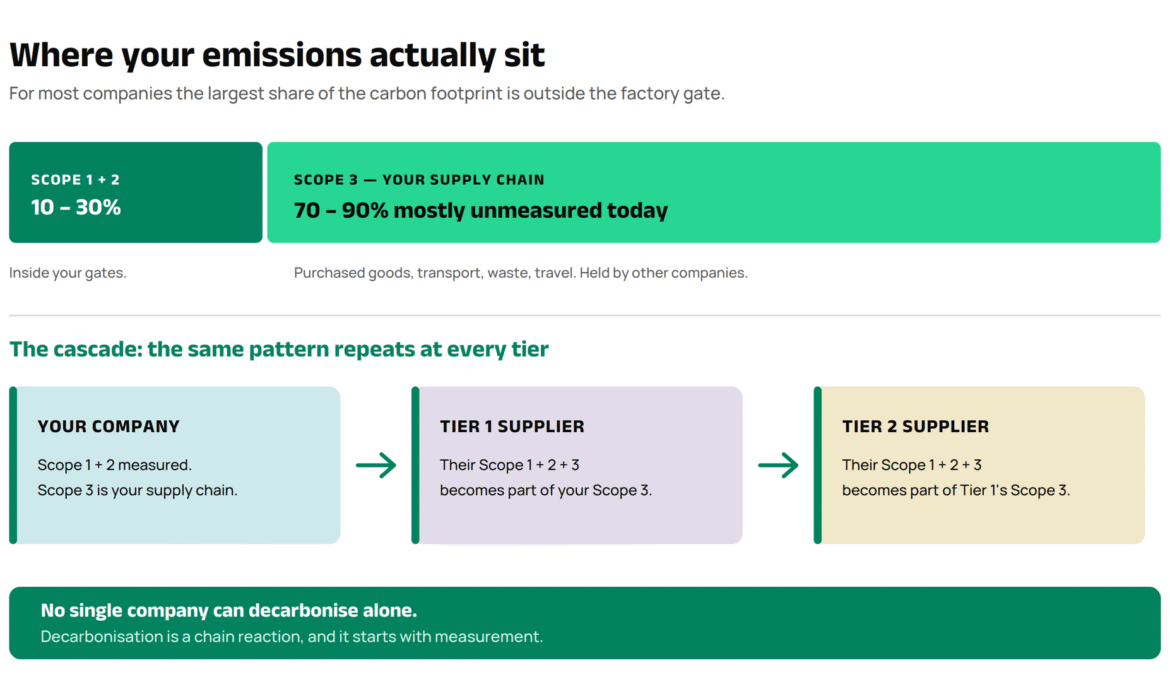
Figure 1. The share of the footprint that sits in the supply chain, and the cascade that carries it tier by tier.
The structure matters more than the percentage. A supplier’s full footprint, its own Scope 1, 2 and 3, is allocated into your Scope 3 in proportion to what you buy from them. The same rule then applies between your Tier 1 supplier and their Tier 2. Decarbonisation is therefore a chain reaction rather than a project, and the first link in that reaction is not a target. It is a measurement.
The gap is not ambition. It is data.
The evidence here is consistent across two independent datasets, and it is uncomfortable.
MIT’s State of Supply Chain Sustainability 2026, drawn from 1,810 responses across 91 countries, found that about seventy percent of respondents named supplier data availability as the primary obstacle to measuring Scope 3 emissions. Half flagged methodology gaps and calculation complexity on top of that. In North America, half of firms still run this on spreadsheets (Source: MIT Center for Transportation and Logistics, 2026). Commitment is not the problem: seventy-three percent of businesses held their sustainability commitments steady through a turbulent policy year. Only thirty-nine percent of those had integrated sustainability into day-to-day decisions.
EcoVadis reached the same place from the buyer’s side. Its 2026 Sustainable Procurement Barometer surveyed 1,000 buying organisations and around 2,000 suppliers. Forty-eight percent of buyers now have visibility into three quarters or more of their Tier 1 suppliers, up from twenty-seven percent in 2024. Roughly ninety percent still see less than half of Tier 2. Thirty percent of suppliers provide no emissions data at all (Source: EcoVadis, 2026).
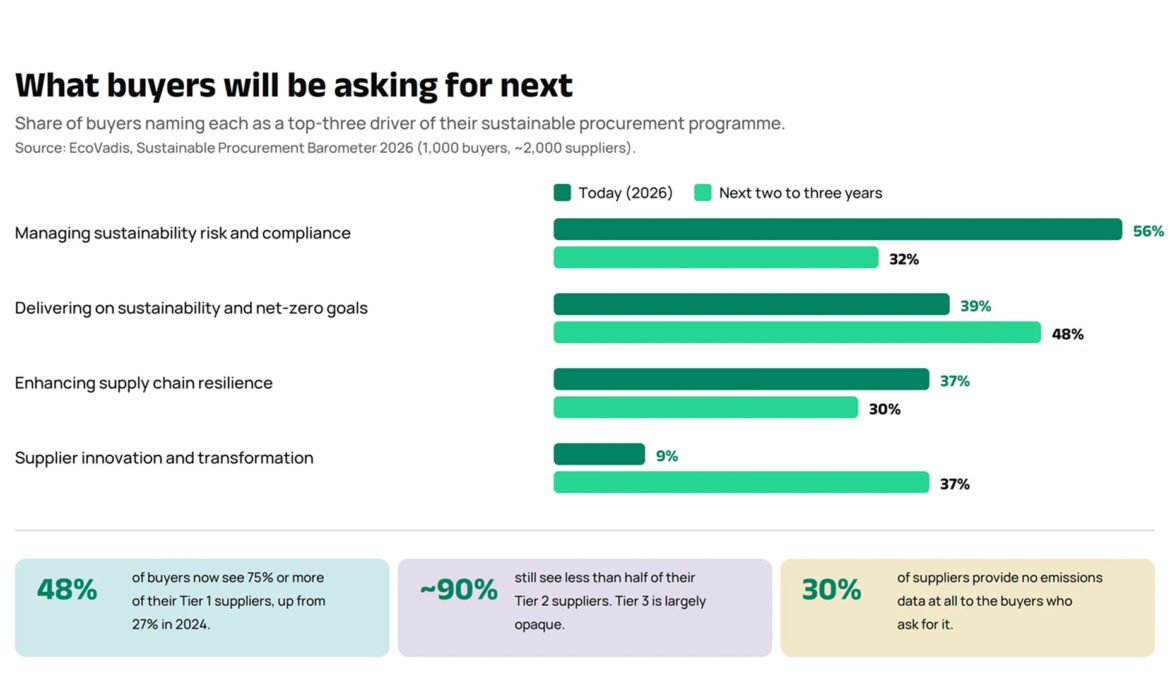
Figure 2. What buyers say is driving their programmes today, and what they expect to be driving them within three years. Source: EcoVadis Sustainable Procurement Barometer 2026.
Read the shift in that chart carefully, because it is the whole commercial story. Risk and compliance falls away as the dominant driver. Supplier innovation and transformation, which barely registered in 2024, moves into second place. Buyers are saying, in survey form, that sending data will soon stop being enough to stand out. The supplier who can help a customer hit a target will be the supplier who keeps the contract.
If you are a procurement leader reading this, there is a question worth sitting with. How much of your own ESG effort today would still be useful if the reporting requirement disappeared tomorrow?
ESG is not a report you file. It is a business decision you make.
This is the pivot, and it is worth saying slowly, because most organisations are stuck at the first of four steps.
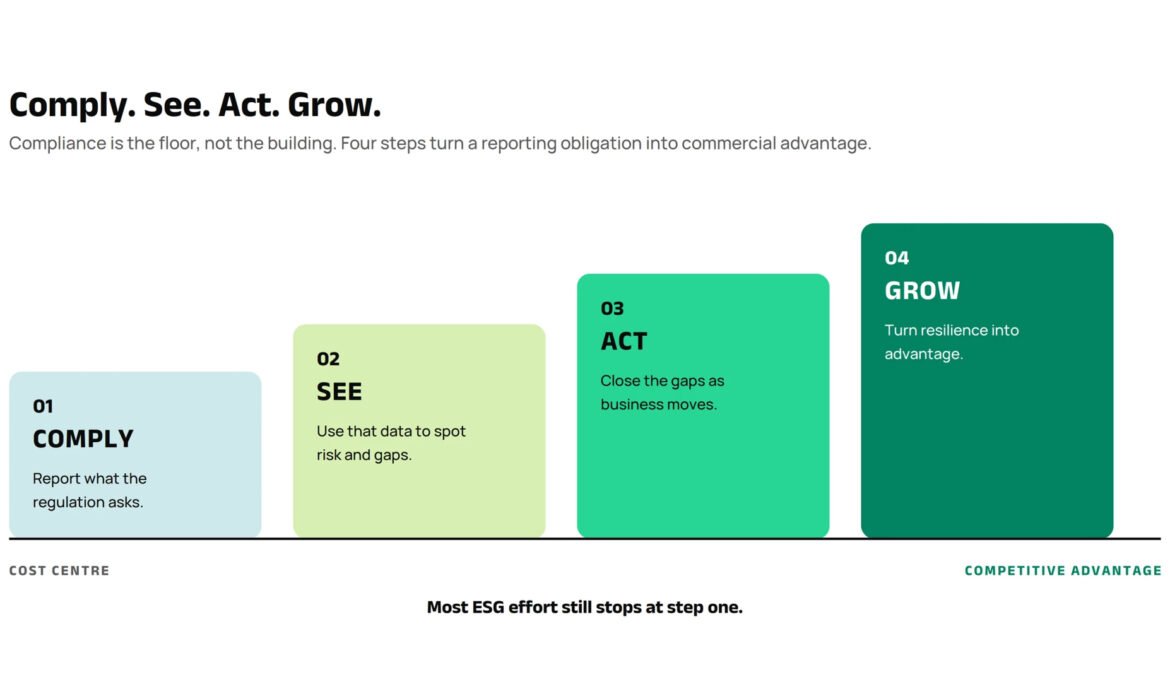
Figure 3. Compliance is the floor, not the building.
Comply, and you report what the regulation asks. See, and you use that same data to find where the risk and the waste actually are. Act, and you close those gaps as ordinary business decisions with ordinary payback periods. Grow, and the resilience you built becomes the reason a customer chooses you over a cheaper bid. The data collected at step one is the raw material for steps two, three and four. Most companies collect it, file it, and throw away the value.
The proof is not theoretical
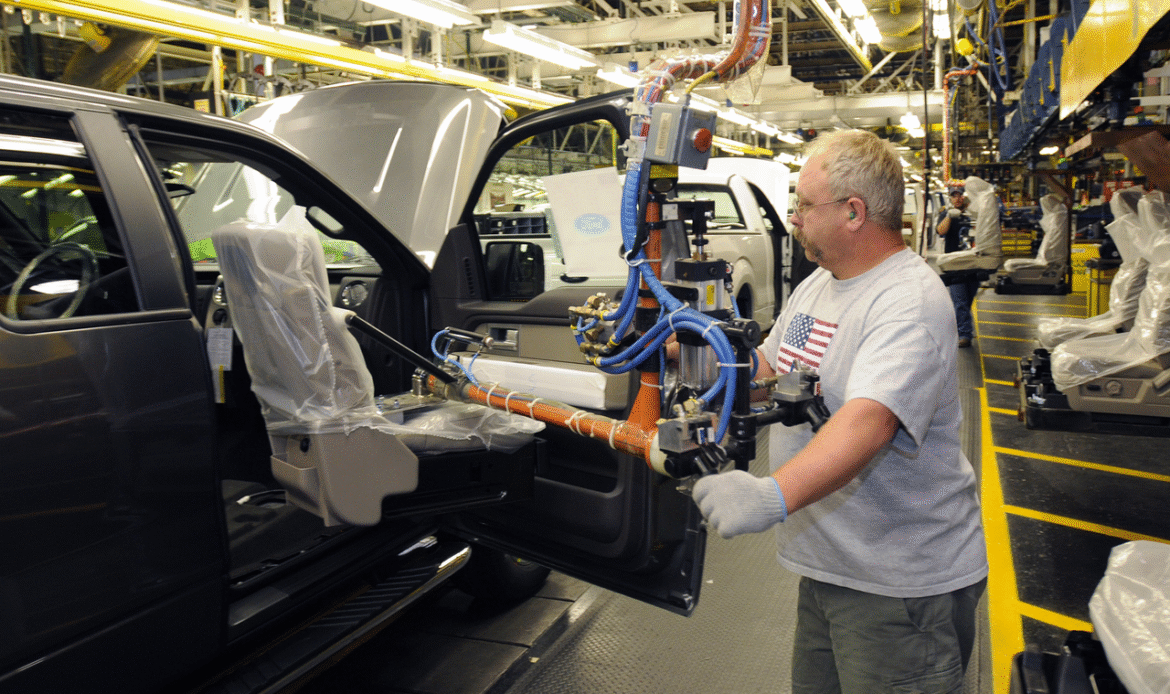
A modern assembly plant. The companies that treated sustainability as an operating discipline rather than a reporting obligation found the savings inside the process, not beside it. Photo: Kansas City Assembly, CC BY 2.0, via Wikimedia Commons.
Interface, a carpet manufacturer, launched Mission Zero and rebuilt manufacturing around recycled inputs and radical efficiency. Sustainability was not a parallel track alongside the cost programme. It was the cost programme (Source: Interface Mission Zero reporting).
Starbucks built C.A.F.E. Practices and Farmer Support Centres, putting agronomy, finance and climate-resilient training into the hands of hundreds of thousands of smallholders. The return is procurement stability: better yields, lower farmer costs, stronger supplier loyalty (Source: Starbucks C.A.F.E. Practices disclosures). The social pillar, read properly, is risk management on the first mile of the chain.
Unilever wired sustainability into board oversight and brand strategy. Its Sustainable Living Brands grew sixty-nine percent faster than the rest of the business and delivered three quarters of total company growth in 2018 (Source: Unilever, 2019). Governance is not overhead. It is where growth compounds.
Closer to home, two Indian companies reached the same insight from different directions. Mahindra treated water as production infrastructure rather than corporate social responsibility, with recharge structures and closed-loop plants that let factories keep running in water-stressed geographies (Source: Mahindra Group sustainability disclosures). ITC has been water-positive for more than twenty years and carbon-positive over a similar span, running watershed development and afforestation as core operating practice, which is what secures the agricultural raw material its business depends on (Source: ITC audited sustainability reports).
| The pattern across all fiveNone of these companies started with a report. Each started by measuring something their industry treated as someone else’s problem, then acted on what the measurement showed. The disclosure followed the decision. It did not replace it. |
Before you send the next questionnaire, two mirrors
The first mirror is uncomfortable and it is pointed inward. A procurement leader I know said this about his own team: they want to join purchasing, not procurement, because they want the glamour and the credit. If that is how a buying team sees its own work, how will the same team carry a sustainability mandate credibly to a supplier?
The second mirror is pointed at the supplier you just emailed.
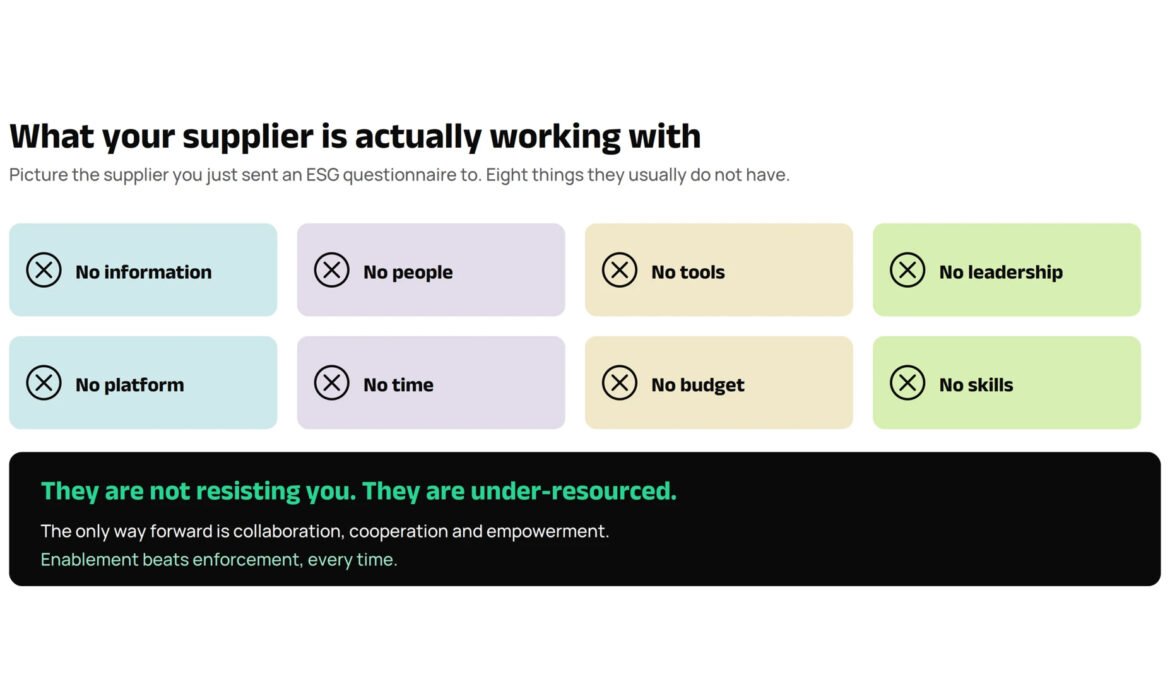
Figure 4. The eight gaps behind most non-responses to a supplier ESG request.
EcoVadis found that only forty-one percent of suppliers report a customer who is both committed and actively engaged. About half say their buyers express commitment but follow through with very little. Seventeen percent feel genuinely incentivised to improve (Source: EcoVadis, 2026). That is not resistance. That is a programme designed as an obligation and delivered without support.
The same dataset contains the encouraging half of the story. Improvement is a function of repetition, not budget. A small company completing its second sustainability rating scores 7.4 points higher than a comparable company completing its first, with the same resources. Companies rated for ten years or more score 63.2 on average against 51.5 for first-time filers, and forty-five percent of them reach advanced status against seventeen percent of first-timers (Source: EcoVadis Sustainability Ratings Index, 10th edition, 2026). Suppliers do not need to be rich to improve. They need to be started, and then kept going.
Three things a procurement leader can start immediately
Change the culture before you change the scorecard. Shift procurement from unilateral control to collective, systems thinking. Peter Senge’s argument in The Fifth Discipline holds here: culture is the only durable route to change, because a mandate that the buying team does not believe in will be delivered as a mandate, and answered as one.
Empower your suppliers rather than policing them. Give them knowledge, templates, platforms and awareness sessions. Recognition costs very little and moves the chain further than escalation does: an ESG rating inside your vendor scorecard, a preferred supplier designation visible in your own RFQ process, milestone certificates a supplier can reuse in other tenders, and a named mention in your sustainability report. A supplier with three reasons to participate will bring peers with them.
Treat it as the business, not a business priority. Resilience is a profit and loss line. The stories above are not moral arguments, they are margin arguments. Once sustainability sits in strategy rather than in a compliance calendar, the sequencing of everything else becomes obvious.
On sequencing, the practical route is a phased one. Start with five to fifteen of your highest-spend Tier 1 suppliers, prove the process, and build the playbook on a small group where a problem is recoverable. Review at the gate, then expand to the rest of Tier 1 and the first Tier 2 names. Scale by emissions materiality rather than by alphabetical order. Three waves, two gate reviews, and the programme becomes business as usual rather than an annual scramble.
You do not have to invent the rulebook or the tools
ISO 20400:2017 is the first international standard for sustainable procurement. It is guidance rather than red tape, adaptable to any size and sector, and it covers the full cycle from policy and strategy through risk, sourcing and monitoring. It turns knee-jerk supplier requests into a repeatable operating model (Source: ISO, 2017).
Two free tools are worth thirty minutes each. En-ROADS, built by MIT Sloan and Climate Interactive, is a live climate simulator with roughly thirty policy and business levers, and it gives a leadership team a shared language for strategy conversations. WRI Aqueduct is a global water risk atlas that will map any site against water stress, flood and drought. Run your top three supplier locations through Aqueduct this week and you will have a prioritized list within a week.
The one question worth taking on
Two shocks in one year tested every supply chain in this market, and most organisations found a way through both. The organisations that found it cheaply were the ones who already knew where their exposure was, because they had measured it before they needed to.
So, the question I ask is: What decision are you making today that your 2030 supply chain will thank you for?
And a second one, for the leaders who already know the answer and are looking at the size of the task: would it be unreasonable to start with fifteen suppliers instead of five hundred?
| Where Switch fits Switch Climate Tech works with enterprises and their suppliers on exactly this problem. Supplier onboarding and awareness sessions, Scope 1, 2 and 3 data collection aligned to ISO 14064-1:2018 and the GHG Protocol, and audit-ready outputs for BRSR, CSRD, CBAM, GRI, EcoVadis, SBTi and CDP. Suppliers keep their own verified report and reuse it with every customer who asks, and raw supplier data is never shared with the buying enterprise, only the aggregated allocation. Our mantra is measure -> mitigate -> transform. If supply chain decarbonization is on your agenda this quarter, I am happy to talk it through. Write to vinayak@switchclimatetech.com or visit switchclimatetech.com. |
References
1. CNBC (2026). The Strait of Hormuz crisis explained: what it means for global shipping. cnbc.com
2. S&P Global Commodity Insights (2026). Oil tanker traffic halts in Strait of Hormuz amid Gulf strikes. spglobal.com
3. MIT Center for Transportation and Logistics (2026). State of Supply Chain Sustainability 2026. ctl.mit.edu/state-supply-chain-sustainability-report-2026
4. EcoVadis (2026). Sustainable Procurement Barometer 2026. ecovadis.com/insights/barometer
5. EcoVadis (2026). Sustainability Ratings Index, 10th edition, and Supplier Intelligence Report 2026. ecovadis.com/insights/index-2026
6. Greenhouse Gas Protocol. Corporate Value Chain (Scope 3) Accounting and Reporting Standard. ghgprotocol.org
7. ISO (2017). ISO 20400:2017 Sustainable procurement, guidance. iso.org/standard/63026.html
8. Unilever (2019). Unilever’s purpose-led brands outperform. unilever.com
9. Interface. Mission Zero reporting. interface.com
10. Starbucks. C.A.F.E. Practices disclosures. starbucks.com
11. Mahindra Group. Sustainability disclosures. mahindra.com
12. ITC Limited. Audited sustainability reports. itcportal.com
13. Climate Interactive and MIT Sloan. En-ROADS climate simulator. climateinteractive.org/en-roads
14. World Resources Institute. Aqueduct water risk atlas. wri.org/aqueduct
15. Senge, P. (1990). The Fifth Discipline. Doubleday.
